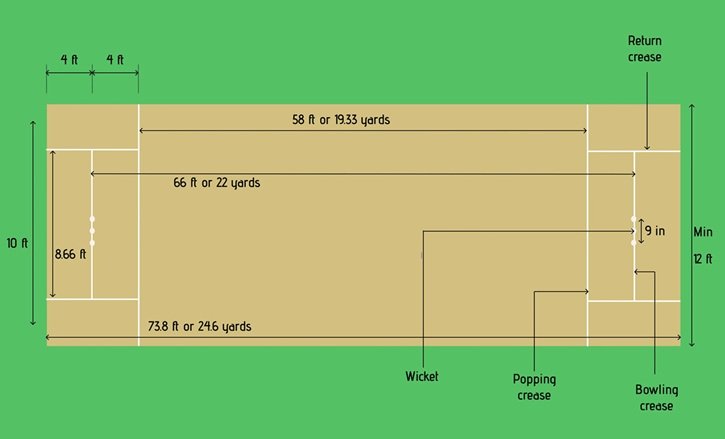

Cricket is a recreation of pleasant details, and certainly one of its maximum vital technical elements is the set of creases marked on the pitch. Many new lovers regularly ask, “What number of creases are there in cricket?” because the ground markings can look complicated at first. These creases determine the entirety—run-outs, stumpings, no-balls, wide balls, or even if a batter is secure or out.
Introduction
If you watch cricket on TV or at a stadium, you will see white lines close to the stumps. These lines are referred to as creases. Each crease has a specific reason, and gamers ought to understand them deeply to perform well.
The query “how many creases are there in cricket?” is important for fans, gamers, and college students preparing for cricket-related exams. With a simple clarification, photos of your thoughts, and actual fit examples, this text will help you recognise the lot honestly.
How Many Creases Are There in Cricket?
There are 4 essential creases in cricket:
- Popping Crease
- Bowling Crease
- Return Crease (Left Side)
- Return Crease (Right Side)
So, if someone asks “how many creases are there in cricket?”, the simple and correct answer is four.
These 4 creases define the playing area for batters and bowlers, and additionally help umpires make correct selections.
Types of Creases in Cricket
Below is a clear clarification of each crease, its measurement, and its reason.
1. Popping Crease
The popping crease is the most significant line for both batters and bowlers.
Measurements
- 4 feet (1.22 m) in front of the stumps
- Extends 12 toes on each side
Use
- Batter ought to region bat or body inside the popping crease to be safe.
- Used for run-out, stumping, and no-ball choices.
Example
When the wicketkeeper eliminates the bails and the batter’s foot is outside the popping crease, the batter is out.
2. Bowling Crease
This line passes through the stumps.
Measurements
- 8 toes 8 inches (ca. 20 cm) long
- Marked 22 yards (ca. 20 m) from the other bowling crease
Use
- Determines where the bowler should bowl from.
- Front foot should land in the back of the popping crease, however, within the go back crease.
Example
If the bowler’s front foot crosses the popping crease, it becomes a no-ball.
3. Return Crease (Left & Right)
There are two go-back creases—one on each facet of the bowling crease.
Measurements
- 8 feet (2.44 m) in the back of the popping crease
- Perpendicular to the bowling crease
Use
- Used to decide if the bowler’s again foot stays within the allowed location
- Prevents unlawful bowling angles
Example
If the bowler’s again foot lands outdoor the return crease, the umpire calls it a no-ball.
Table: Overview of All Creases in Cricket
| Crease Type | Purpose | Measurement |
|---|---|---|
| Popping Crease | Batter safety, run-out, stumping, no-ball | 4 feet (1.22 m) in front of stumps |
| Bowling Crease | Bowler delivery area | 8 ft (2.44 m) 8 in long |
| Return Crease (Left) | Limits the bowler’s movement | 8 ft (2.44 m) behind popping crease |
| Return Crease (Right) | Limits bowler’s movement | 8 ft (2.44 m) behind popping crease |
Why Are Creases Important in Cricket?
Understanding what number of creases are there in cricket enables you to spot how the rules and decisions paintings. Creases are vital since they:
1. Prevent Illegal Bowling
Creases make certain bowlers do not bowl too wide or too close to the batter.
2. Help Identify Dismissals
Most dismissals depend on crease rules like:
- Run-out
- Stumping
- Hit-wicket
- No-ball
3. Maintain Fair Play
Bowling and batting areas have to be virtually defined to avoid chaos.
4. Provide Strategy
Batters use the crease to exchange stances and confuse bowlers, while bowlers use crease movement to create one-of-a-kind angles.
How Creases Affect Player Performance
Understanding how creases work allows gamers to carry out better. Here’s how:
Batters
Batters often use the popping crease too:
- Move ahead or backward
- Play spinners accurately
- Avoid getting stumped
- Take quick singles
Using the crease smartly allows gamers to score runs and survive close calls.
Bowlers
Bowlers use the bowling and return creases to:
- Change the angle of assault
- Create wider or nearer deliveries
- Avoid no-balls
- Generate more tempo or swing
Fast bowlers like Jasprit Bumrah and Mitchell Starc regularly take wider angles, using the go-back crease for variation.
Wicketkeepers
Creases help wicketkeepers live prepared for:
- Stumping
- Collecting throws for run-outs
- Judging if the batter is secure
Real Match Examples Where Creases Changed the Game
Below are real-lifestyles fit moments wherein crease guidelines determined the outcome:
1. MS Dhoni’s lightning-rapid stumping
In many suits, Dhoni dismissed batters by catching them just outdoor the popping crease. A reliance on inches decided the in shape.
2. Jasprit Bumrah’s no-balls
Several times, his front foot crossed the popping crease, resulting in no-balls or even costing wickets.
3. Ben Stokes in the 2019 World Cup Final.
An arguable overthrow rule was carried out after the ball struck Stokes’s bat close to the crease during the run.
Comparison: Batting Crease vs Bowling Crease
FeatureBatting (Popping) CreaseBowling CreasePurposeBatter protection, scoring runsDefines bowler’s shipping pointUsed ForRun-out, stumping, grounding batNo-ball, criminal bowling positionDistance4 toes from stumpsPassing thru stumpsAffectsBatterBowler
Does Every Format Use the Same Creases?
Yes—whether it is:
- Test cricket
- ODI cricket
- T20 cricket
Creases continue to be the same.
Only subject to restrictions and fit period change.
So the answer to “how many creases are there in cricket?” is usually the identical—four.
Conclusion
Understanding how many creases are in cricket enables lovers to revel in the game higher. The 4 creases—popping crease, bowling crease, and the two go-back creases—are the muse of cricket rules. They decide whether the bowler promises a legal ball, whether a batter is out or secure, and the way techniques are shaped through both teams.
From run-outs to no-balls to stumping choices, creases influence nearly every moment of an in shape. Whether you’re an amateur, a student, or a serious cricket lover, understanding the cause of every crease allows you to notice the game simply and recognise its technical splendour.
FAQ
1. How many creases are there in cricket?
There are four creases in cricket—one popping crease, one bowling crease, and two return creases.
2. Which crease determines a run-out?
The popping crease is used for run-out selections.
3. What happens if a bowler steps over the popping crease?
It becomes a front-foot no-ball.
4. Can a batter stand outdoors, in the crease?
Yes, however, they have to return within the popping crease to be secure.
5. Are the crease regulations identical in all codecs?
Yes, crease measurements and guidelines are identical in Test, ODI, and T20 cricket.
Read More:-