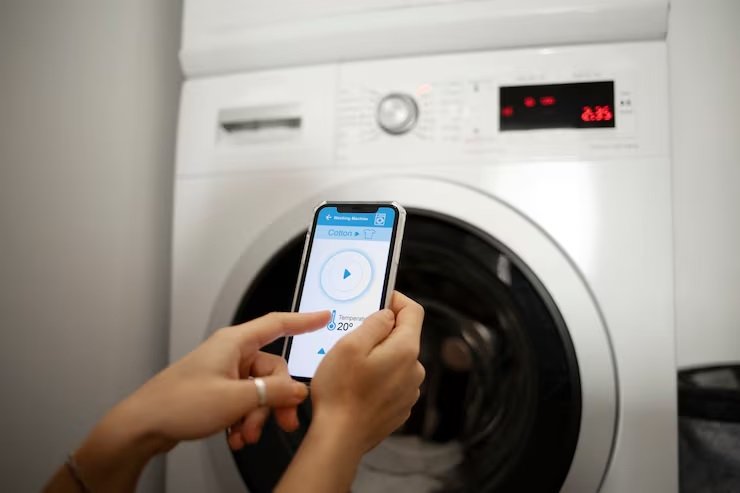

Modern appliances have replaced the simple indicator lights of earlier generations with digital displays that show cryptic error codes when something goes wrong. A flashing E13 on a washing machine, an F7 on an oven, a series of blinking lights on a dishwasher — each of these is the appliance trying to tell you something specific, and each one means the difference between a five-minute fix and an unnecessary service call. The frustrating part is that the codes are rarely self-explanatory. Without documentation, they are just characters on a screen. With documentation, they are a diagnostic tool that points directly at the problem. This article explains how to decode error codes systematically, which categories of codes typically have easy fixes, and when an error code is actually telling you to call a professional rather than attempt a repair yourself.
Why Error Codes Exist in the First Place
Appliance manufacturers introduced error codes for two practical reasons. The first was serviceability — a code tells a technician exactly which subsystem has a problem, which shortens diagnosis time and reduces the cost of warranty repairs. The second was liability — a specific code documents that the appliance detected a specific condition, which matters if the issue becomes the subject of a dispute or a recall. What the codes were not designed for is end-user comprehension. They are engineered as technician-facing signals, which is why they use short alphanumeric patterns that assume the reader has access to the service documentation. For owners, this means the code is half the information — the other half is in the manual that tells you what the code means.
Find the Right Manual for Your Specific Model
The same error code can mean different things on different appliances, even within the same brand. An F7 on a 2019 Bosch dishwasher is not necessarily an F7 on a 2024 Bosch dishwasher. This is why generic error code lists on random websites often mislead. The reliable source is always the manual for your specific model, which lists every possible code and exactly what triggers each one. Searching a dedicated manual archive like ManualMachine.com for your brand and model number will usually surface the PDF in seconds, and the troubleshooting section is typically located near the end of the document. Bookmark that page — for any given appliance, you will probably consult it more than once over the product’s lifetime.
The Codes That Usually Have Easy Fixes
A surprisingly large share of error codes point at problems that any owner can resolve without tools. Codes related to water supply typically mean a kinked inlet hose, a closed tap, or a clogged filter screen at the hose connection — all fixable in under five minutes. Codes related to drainage usually mean a blocked drain filter, which on most washing machines is accessible through a small door at the bottom front and clears in about ten minutes. Codes related to door or lid sensors often mean the door is not fully closed, or that something is stuck in the seal preventing a complete latch. Temperature-related codes on refrigerators and freezers frequently mean blocked air vents inside the appliance, which just need to be cleared of food items. Before assuming the worst, check the easy causes.
The Codes That Signal Real Problems
Some codes genuinely indicate failures that require professional attention. Codes pointing at control board failures, motor or compressor issues, heating element faults, or communication errors between subsystems are usually not user-serviceable. Attempting to fix these yourself often creates bigger problems than the original issue — or worse, creates safety hazards, particularly around heating elements and refrigeration systems that work under pressure. When the manual categorizes a code under call for service, trust that categorization. The repair cost is almost always less than the cost of the damage done by a well-intentioned but incorrect DIY attempt.
Resetting After a Successful Fix
After resolving the underlying cause of an error code, the display often does not automatically clear. Most appliances require a specific reset procedure — usually holding a button combination for several seconds, unplugging the appliance for a minute, or running through a test cycle. The reset procedure is model-specific and documented in the manual. Skipping it sometimes leaves the appliance in an error state even after the problem is fixed, which makes people think the repair did not work. Take the extra minute to perform the reset correctly. It is almost always the final step between a successful troubleshooting session and a working appliance.
Keeping a Log of Error Codes
Appliances that show the same error code repeatedly are telling you something different than appliances that show a code once and never again. A one-time code is usually a transient condition — a temporary water supply issue, a door that did not latch, a power fluctuation. A recurring code points at a genuine intermittent fault that is worth addressing before it becomes a constant failure. Keeping a simple log, even just a note on your phone with the date and the code each time it appears, builds up evidence that makes diagnosis much more accurate when you eventually involve a technician. A service call that starts with here is a log of exactly when the code appeared over the last three months is dramatically more productive than one that starts with it flashes sometimes.
When to Involve a Professional
The decision to call a repair technician comes down to three questions. Does the manual categorize the code as a user-serviceable issue or a service issue? Have the obvious easy fixes been tried without resolving it? And is the cost of the repair justified by the remaining useful life of the appliance? For an appliance under warranty, call the manufacturer’s service line first — the repair may be free and any DIY attempt could void the warranty. For an older appliance where the repair cost would exceed fifty percent of the replacement cost, sometimes the right answer is to replace rather than repair. The error code itself, combined with the manual’s explanation, usually makes this decision obvious.
The Long-Term Habit Worth Building
Households that handle error codes well share one habit: they locate and save the manual for each appliance as soon as it enters the house, rather than waiting for the first problem. When the first error code eventually shows up — and it always does — the response takes two minutes instead of two hours. This small upfront investment in documentation compounds across every appliance in the home and across the full lifetime of each one. It is one of the simplest household improvements that most people never think to make.